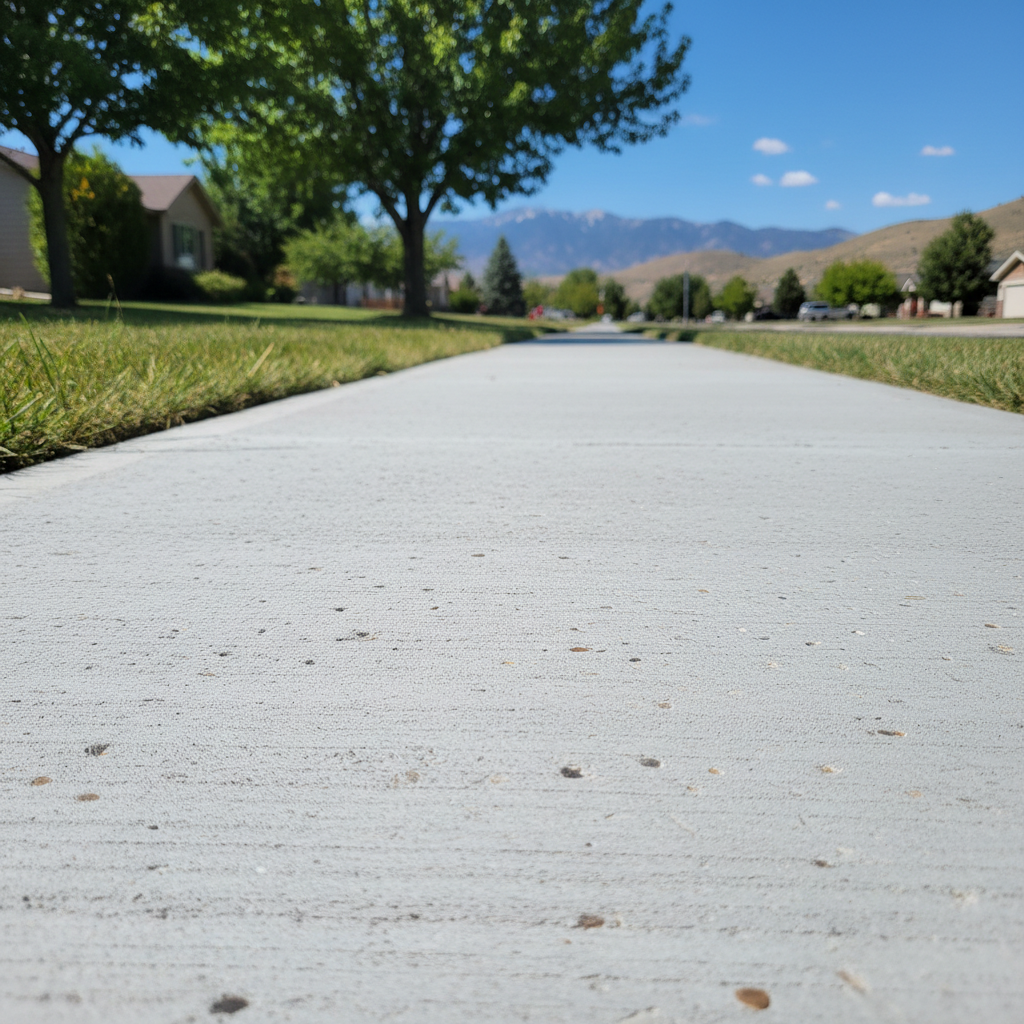
Why do my concrete sidewalks crack, and what can I do about it?
Cracks are a pretty common sight here in Murray, especially with our freeze-thaw cycles. You've got a few main culprits, really. First, there's the ground underneath. If it wasn't prepped right, or if we get a lot of water runoff from the mountains that causes soil erosion, the concrete loses support. Then it cracks, either from its own weight or from people walking on it. Next, think about the concrete mix itself – if it was too wet, or didn't have enough cement, it's just weaker from the start. And of course, those temperature swings we get, where it freezes solid overnight and then warms up during the day, cause expansion and contraction. That puts a lot of stress on the slab. Small hairline cracks? Often just surface shrinkage, not a big deal. But if you see cracks wider than a credit card, or if one side of the crack is noticeably higher than the other, you've definitely got a structural issue. For those, you'll need to think about repair or even replacement. We often see this around older homes near Fashion Place Mall, for instance, where the soil might have settled differently over the decades.
How long should a new concrete sidewalk last in Murray?
If it's done right, a good quality concrete sidewalk should last you 20 to 30 years, easy. Some even go longer. The key, though, is that 'done right' part. That means proper base preparation – compacting the soil, adding a good layer of gravel. It means using the right concrete mix for our climate, with proper air entrainment to handle freezing and thawing. And it means correct installation, including proper control joints (those cuts you see in the concrete) to manage where cracks happen. A lot of folks try to cut corners, or hire someone who doesn't really know what they're doing, and then they're looking at repairs or replacement in 5-10 years. You really do get what you pay for with concrete.
Do I need a permit to replace my sidewalk in Murray?
Yep, usually you do. For any significant concrete work, especially if you're replacing a public sidewalk or even a driveway approach that connects to the street, the City of Murray wants to make sure it's done to code. This protects you, your neighbors, and the city. It ensures things like proper drainage, correct thickness, and ADA compliance if it's a public path. Don't skip this step. If you don't get a permit, you could face fines or even be forced to tear out new work and redo it. What a headache and expense! Any reputable contractor, like us at Neighborly Concrete Solutions, will handle the permit process for you or guide you through it.
What's the difference between concrete repair and replacement? When should I choose one over the other?
This is a big one. Repair is usually for smaller, non-structural issues. Think minor spalling (that's flaking surface), small chips, or hairline cracks that aren't getting worse. You can sometimes patch these or use a concrete resurfacer. Mudjacking or slab jacking, where we pump a material under the slab to lift it, is also a type of repair for uneven sections. Replacement, on the other hand, is for when the concrete is just too far gone. We're talking about extensive cracking, significant heaving or sinking, large sections crumbling, or if the base is completely shot. If more than a quarter of the slab is severely damaged, or if the underlying issues are too complex for a simple fix, replacement is usually the smarter, more cost-effective long-term solution. It's like patching a tire versus buying a new one; sometimes the old one is just too worn out, you know?
How much does a new concrete sidewalk cost per square foot in Murray?
Alright, let's talk numbers, but remember these are estimates because every job is different. In Murray, you can generally expect to pay anywhere from $8 to $15 per square foot for a standard concrete sidewalk. That's a pretty wide range, right? It depends on a few things: the thickness of the concrete (a 4-inch sidewalk is standard for foot traffic, but you might need 6 inches for heavier loads), the amount of preparation work needed for the base, if there's old concrete to tear out and haul away, and any special finishes you want, like stamped or colored concrete. Access to the site also plays a role – if it's hard to get equipment in, that adds to labor costs. Always get a detailed, written estimate that breaks down all these factors.
Can I pour concrete myself, or should I always hire a professional?
Look, for a tiny, simple patch job, maybe. But for an actual sidewalk, even a small one, I strongly recommend hiring a pro. Concrete work isn't like painting a wall. There's a lot of science and skill involved in getting the mix right, preparing the base, pouring it evenly, finishing it properly, and then curing it so it reaches its maximum strength. If you mess up any of those steps, you'll end up with a weak, ugly, or quickly failing sidewalk. You'll spend more money fixing your mistakes than you would have hiring someone to do it right the first time. Plus, it's back-breaking work. You'll save your back and your wallet in the long run by calling in the experts.