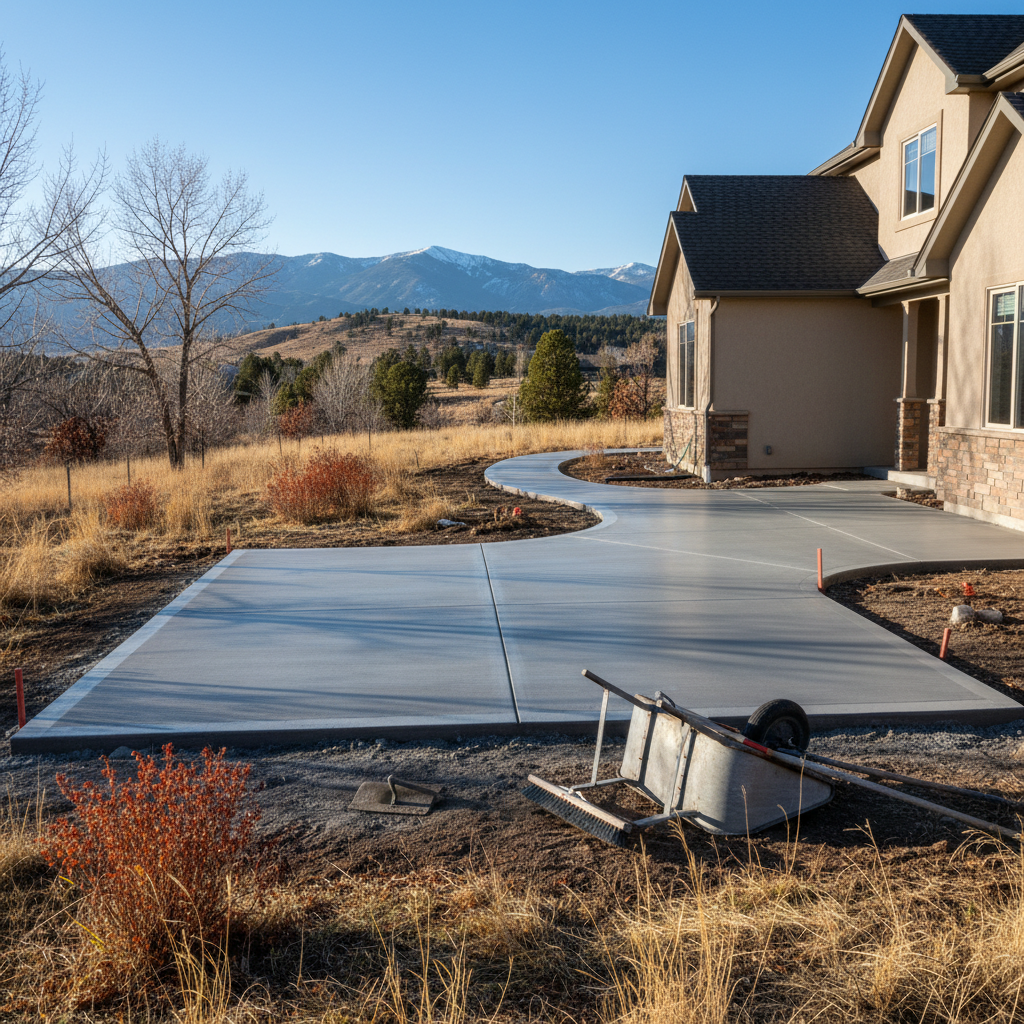
When planning a concrete project around Murray, you quickly realize our local weather dictates everything. We deal with freezing winters, intense summer heat, and heavy clay soils that shift with the moisture. If you do not time your pours right, you will end up with scaling, cracks, or a weak slab that will not survive a Utah winter.
The Best Windows for Pouring Concrete in Murray
Timing is everything when you are working with concrete in the Salt Lake Valley. Spring and fall give us the most forgiving weather windows. During these months, temperatures usually hover in that sweet spot where concrete can cure at a steady, predictable pace without extreme thermal shock.
- Late spring (May through June) offers mild days once the overnight frost danger passes.
- Early fall (September through October) gives you warm days and cool nights, which is ideal for moisture retention.
- Summer is doable, but soaring July and August afternoon temperatures can flash-dry your surface and cause shrinkage cracking.
- Winter pours require specialized blankets, heated water, and chemical accelerators just to keep the mix from freezing before it sets.
How Local Conditions Affect Your Flatwork
Our valley floor soil tends to be heavy and clay-heavy, meaning it expands when wet and shrinks when dry. If your subgrade is not prepped properly to handle that movement, even a thick driveway will crack under pressure. We also see major temperature swings between daytime highs and nighttime lows, especially during shoulder seasons. That rapid fluctuation forces concrete to expand and contract quickly, putting stress on control joints.
Neighborly Concrete Solutions always factors local conditions into our prep work. Making sure the sub-base is compacted tightly prevents settling later on, no matter what the Murray climate throws at us.
Protecting Your Investment Year-Round
Once your new patio, driveway, or walkway is in, keeping it safe from the elements is important. Salt use during our snowy Murray winters is public enemy number one for concrete. Chemical de-icers cause the surface to pit and flake off over time. Switch to sand or kitty litter for traction when it gets icy, and skip the harsh salts entirely.
Sealing your concrete every few years acts as a shield against moisture penetration and freeze-thaw cycles. Water gets into tiny pores, freezes, expands, and breaks the material apart from the inside out. A quality breathable sealer stops that cycle dead in its tracks.
Keep an eye on drainage around your slabs, too. If water pools near the edges of your foundation or flatwork, freeze-thaw action will undermine the subgrade in no time. Simple fixes like clearing out gutters and directing downspouts away from concrete edges go a long way toward keeping everything solid for 15 to 20 years or more.