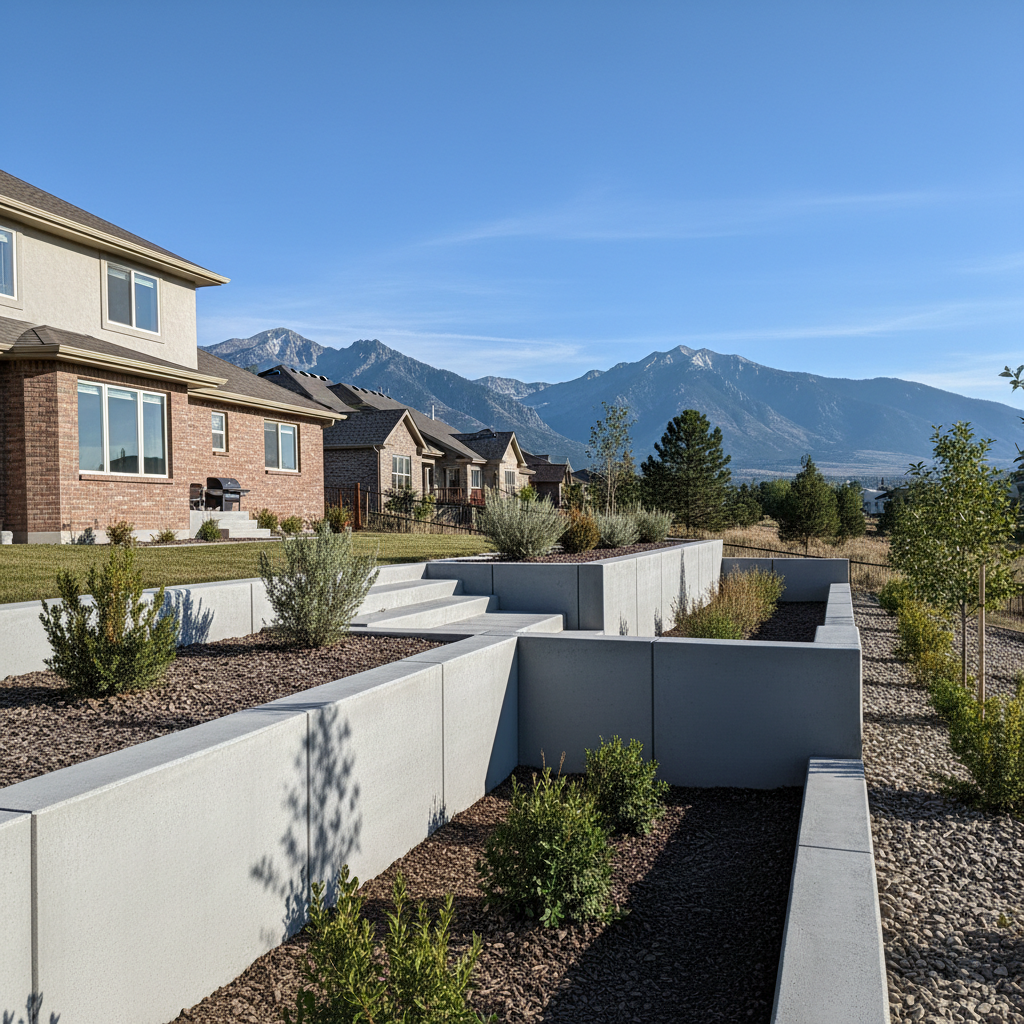
So, you're thinking about putting in a concrete retaining wall, huh? Maybe your yard slopes a bit too much, or you're just trying to carve out some flat, usable space. Smart move – concrete retaining walls are tough, they last forever, and frankly, they look pretty sharp when they're built right. But let's be honest, the first thing everyone wonders is, "What's this going to set me back?"
It's never a simple, one-size-fits-all answer, because every wall project is a little different. Still, I can give you some solid numbers and point out what really makes that price go up or down. I've been doing this work for quite a while here in Murray, and believe me, I've seen it all.
What Makes a Retaining Wall Cost What It Does?
A few big things will really drive your final cost. Don't let anyone tell you it's just about the wall's length. That's part of it, sure, but there's a lot more to the story.
- Wall Height: This is probably the biggest factor. A two-foot wall is a world away from a six-foot one. Taller walls need more material, deeper footings, and often more complex engineering to handle all that soil pressure. If your wall is over four feet, you're usually looking at needing permits and engineered plans, and that definitely adds to the bill.
- Length of the Wall: Kinda obvious, right? More linear feet means more material and, naturally, more labor.
- Site Accessibility: Can we easily get our equipment right up to where the wall needs to go? If we have to hand-dig or wheelbarrow everything because of tight spaces or a really steep backyard, that's going to eat up more labor time and cost more. Some of those older homes near Fashion Place Mall, with their mature landscaping and tight property lines, can be a real headache for access.
- Soil Conditions: Murray's soil can be pretty wild. Some spots have nice, stable dirt, while others might be heavy clay or even old fill. Bad soil might need extra digging, special drainage, or a more serious footing design to make sure everything stays put. We always check this out with a site assessment.
- Drainage Requirements: Any good retaining wall needs proper drainage behind it. This stops hydrostatic pressure from building up and, well, pushing the wall right over. Usually, this means gravel backfill and a perforated pipe. How complicated this drainage system needs to be can really vary.
- Reinforcement: Concrete walls almost always get rebar for strength. Taller walls or those holding a lot of weight will need more rebar and potentially thicker concrete sections.
- Finish Type: A plain, smooth concrete finish is usually the cheapest option. If you want decorative stamps, coloring, or a textured look, that's going to add to both material and labor costs.
Typical Prices for Concrete Retaining Walls in Murray
Alright, let's get down to brass tacks. For a standard, poured concrete retaining wall, you're generally looking at somewhere between $50 to $120 per square foot of wall face. That's the height multiplied by the length, just to be clear.
Let's break that down a bit more, shall we?
- Small, Low Walls (2-3 feet high): For something like a decorative garden bed or just holding back a small slope, you might be at the lower end, around $50-$75 per square foot. This is for simpler walls, maybe 20-30 feet long.
- Medium Walls (3-5 feet high): These are super common for creating usable yard space. You're probably looking at $75-$100 per square foot. This price includes proper footings, rebar, and good drainage.
- Taller, Engineered Walls (5-8+ feet high): Once you hit these heights, the engineering, deeper footings, more reinforcement, and potentially more complex drainage really push the price up. Expect to pay $100-$120+ per square foot. These often involve a lot of digging and backfill work.
So, a four-foot high, fifty-foot long wall (that's 200 square feet of face) could easily run you anywhere from $15,000 to $20,000, depending on all those factors I just talked about. Remember, these are rough estimates. Every single job is unique.
What Should a Good Quote Include?
When you get a quote from Neighborly Concrete Solutions, or any decent contractor for that matter, it should be detailed. Don't just accept a single line with a price. You want to see:
- Excavation: How much dirt needs to be moved, and where it's going.
- Footings: Their dimensions and depth.
- Materials: Concrete strength (like 4000 PSI), rebar size and how far apart it's spaced, gravel for drainage, and the drainage pipe itself.
- Formwork: The cost of building and then taking down the forms for the concrete.
- Pumping/Placement: How the concrete actually gets from the truck into those forms.
- Labor: The crew's time for everything from getting ready to the final touches.
- Drainage System: Specifics on the gravel backfill, weep holes, and that perforated pipe.
- Permits & Engineering (if needed): Who's responsible for these costs and actually getting them.
- Cleanup & Haul Away: What happens to all that extra dirt and construction junk.
Make sure it's all in writing. No one likes surprises, right?
How to Avoid Paying Too Much for Your Retaining Wall
Nobody wants to get ripped off, especially on a big project like this. Here's my best advice:
- Get Multiple Quotes: Don't just go with the first guy who shows up. Get at least three detailed bids. This helps you compare apples to apples and really understand the going rate for your specific project.
- Check References & Reviews: A good contractor will have a track record. Ask for references, look at their past work, and check online reviews. You want someone who really knows how to build retaining walls, not just pour a flat patio.
- Understand the Scope: Make sure every contractor is quoting on the exact same work. If one quote is way lower, find out why. They might be cutting corners on things like drainage or reinforcement, and that's a big deal.
- Don't Just Chase the Lowest Price: The cheapest quote often ends up being the most expensive later on if the wall fails or constantly needs repairs. A retaining wall is a structural thing; it's not something you want to skimp on.
- Ask Questions: If something in the quote doesn't make sense, ask! A good contractor will take the time to explain it all.
Building a concrete retaining wall is a solid investment in your property, truly. Done right, it'll add value, fix those pesky drainage issues, and give you more usable space for decades. Just make sure you know what you're getting into and work with someone who actually knows their stuff.